Charming Villages to Visit
Discover Mallorca's most beautiful mountain villages — where to go, when to visit and where to eat once you're there. · 9 min read
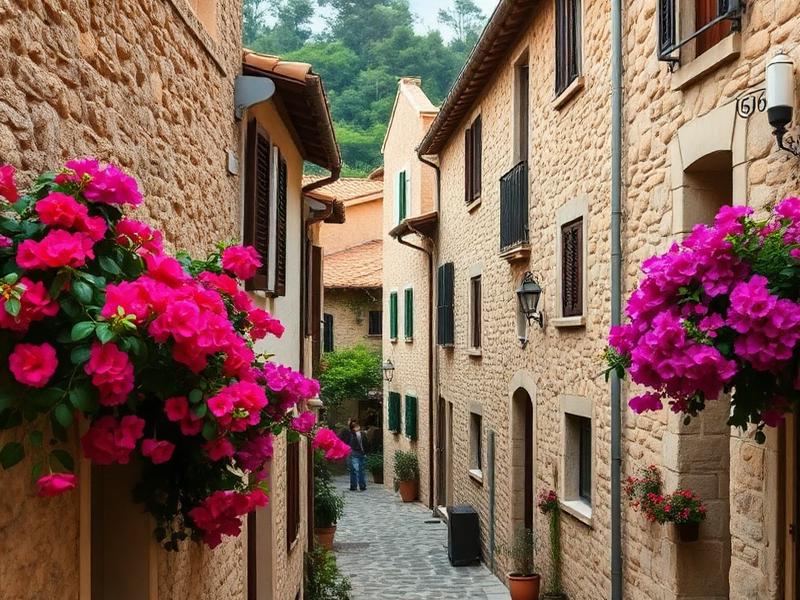
The Tramuntana villages are why people fall in love with Mallorca and never quite shake it off. Honey-coloured stone, geraniums in old olive-oil tins, a church bell ringing midday, the smell of orange blossom and woodsmoke. There are dozens of them; these eight are the ones worth building a trip around.
Deià — Robert Graves's village, still as quietly beautiful as when he arrived in 1929.
Deià
Robert Graves's village, draped on a hillside between the Tramuntana and the sea. The poet's house is now a small, lovely museum (closed Mondays). Walk the lanes, swim at Cala Deià (25 minutes downhill, longer back up), and eat seafood at Ca's Patró March on the rocks above the cove — book weeks ahead in summer.
Valldemossa
Chopin and George Sand spent a famously miserable winter here in 1838 — it rained constantly and the locals didn't like them. The Charterhouse (Real Cartuja) where they stayed is the obvious draw, but the real pleasure is the back streets behind it: stone alleys, blue pots of basil, almost no cars. Try the coca de patata (potato bun dusted in icing sugar) at any village bakery — it's a Valldemossa speciality.
Fornalutx — repeatedly voted one of the most beautiful villages in Spain.
Fornalutx
Repeatedly voted one of the most beautiful villages in Spain. Stone streets, steep steps, hand-painted house numbers on ceramic tiles, orange groves below. There's almost nothing to 'do' — that's the point. Have lunch at Ca N'Antuna with the valley unfurling below your table, then walk the path down to Biniaraix and back.
Sóller
A small town more than a village, but unmissable. Take the 1912 wooden train from Palma (an experience in itself — see below), browse the Saturday market, eat ice cream at Sa Fàbrica de Gelats in the main square, and walk up Carrer de Sa Lluna for the modernist architecture. The vintage tram down to Port de Sóller is part of the pleasure.
Banyalbufar
Terraced cliffs dropping to the sea, a single quiet street, a small swimming cove (Cala Banyalbufar) at the bottom of a 15-minute walk down. The village's Malvasia wine is grown on those terraces and worth seeking out at one of the local restaurants. Quiet on weekdays, a perfect lunch stop on a Tramuntana drive.
Orient
Tiny — 30 permanent residents — hidden in a green valley reached by the Ma-2100 from Bunyola. There's a 17th-century church, two excellent restaurants (Dalt Muntanya and L'Hermitage hotel), and the trailhead for the walk up to Castell d'Alaró. The drive there is half the reason to go.
Estellencs
Often overlooked because it's the first 'real' Tramuntana village heading north from Andratx, and people drive straight through to Banyalbufar. Stop. Park at the top, walk down the main street through the village, swim at the tiny rocky cove below, and have grilled fish at Es Grau on the way out.
Capdepera
Different — east-coast not Tramuntana, with a huge 14th-century walled castle dominating the hill above the village. The medieval market in May is one of the best festivals on the island. Capdepera makes a great base for the quieter east-coast beaches (Cala Mesquida, Cala Agulla).