High Peaks and Ancient Cloisters: The Slow Pulse of Village Life in the Pla
Escape the coastal developments and discover the silent interior, where life revolves around the parish church, the cycle of the almond harvest, and long lunches. · 13 min read
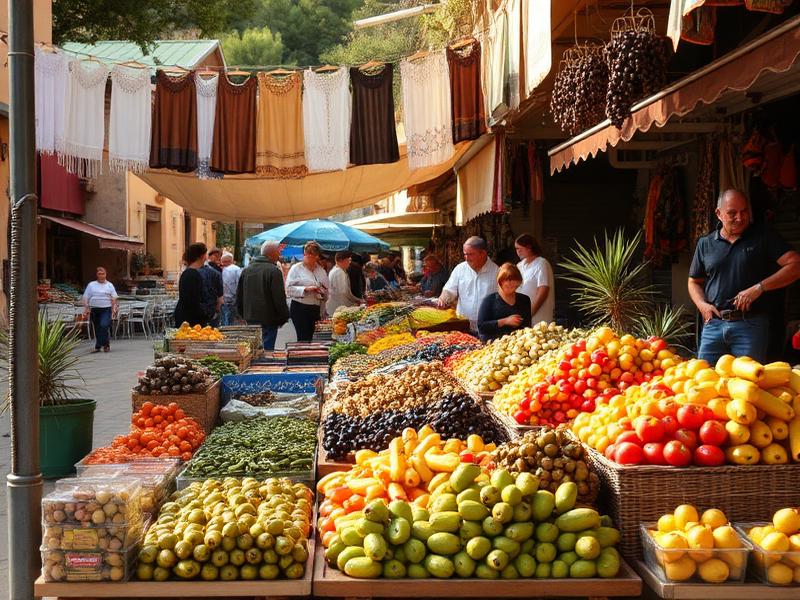
The 'Pla de Mallorca' is the island's vast central plain, a fertile expanse of red earth, windmill skeletons, and cluster villages that tourists often view only through the window of a rental car on their way to the coast. But to skip the Pla is to miss the essential Mallorcan experience. In towns like Petra, Algaida, and Montuïri, the pace of life is dictated by the arc of the sun and the ringing of church bells. Here, the 'pagesos' still gather in the late afternoon to discuss the rain, and the local cooperatives continue to process the olives and grapes that have sustained the island for millennia. It is a world of sandstone facades, interior patios filled with citrus trees, and an enviable, unhurried dignity.
Randa: The Spiritual Summit
Rising abruptly from the flatlands, the Puig de Randa is the spiritual heart of the Pla. A winding road (the Ma-5010) leads to the summit, passing three separate sanctuaries. The highest, the Santuari de Cura, was the retreat of the philosopher Ramon Llull in the 13th century. From this vantage point, you can see across the entire island, from the Bay of Palma to the Bay of Alcúdia. It is a place of profound silence, broken only by the wind. Visiting Randa offers a literal and figurative overview of the agricultural grid that defines the interior’s social and economic history.
- Start your ascent from the village of Randa; the 5km drive to the top is narrow with several hairpin bends, so take it slow and yield to cyclists.
- Visit the small museum at the Santuari de Cura (entry approx 3 EUR) to learn about the Catalan polymath Ramon Llull and the island's medieval intellectual history.
- Stay for lunch at the sanctuary's dining room; they serve a reliable 'Arròs de la terra' for roughly 16 EUR with views that are arguably the best on the island.
- Look for the endemic wildflowers that bloom along the roadside in April and May, a highlight for botanical enthusiasts visiting the central plateau.
- Note that the road can get busy with semi-professional cycling teams on weekday mornings; the best time for a quiet visit is late afternoon before sunset.
- Refill your water bottles at the communal fonts in the village of Randa at the base, which have provided mountain-fresh water to the community for centuries.
Petra: Stone and Sanctity
Petra is perhaps the most architecturally consistent village in the Pla. Built almost entirely from the warm, golden Santanyí stone, its streets are a masterclass in traditional Mallorcan masonry. It is the birthplace of Fray Junípero Serra, the Franciscan monk who founded the missions of California. While this history attracts some international interest, the village remains stubbornly local. The main square, Plaça Ramon Llull, is the town's living room, where children play under the status of the explorer while their parents sip 'Hierbas de Mallorca' at the surrounding bars.
Montuïri and the Windmills
Approaching Montuïri via the Ma-15, the skyline is dominated by the silhouettes of ancient grain windmills ('molins de vent'). While many are now in ruins, they represent the period when this region was the breadbasket of the Mediterranean. The village itself is built on a series of small hills, offering layered views of the surrounding 'fincas'. Montuïri is also home to the Archaeological Museum of Son Fornés, an essential stop for anyone wanting to understand the Talayotic culture—the prehistoric people who first shaped the Mallorcan landscape with massive stone towers.
In the city, time is a thief. In the Pla, time is a friend that we sit with every evening under the porch. — Biel, a vineyard worker in Biniali
Village Exploration Logistics
- Renting a small car is essential; while the TIB bus L400 series connects major towns, reaching the smaller hamlets like Sencelles or Costitx is difficult without private transport.
- Be prepared for the 'siesta' between 13:30 and 17:00; almost all shops and many museums in the interior close during these hours, though restaurants remain open for lunch.
- Parking is generally free on the outskirts of these villages; look for the 'Aparcament' signs to avoid the stress of navigating medieval-width one-way streets.
- Markets in the Pla usually start at 08:00 and finish by 13:00; Monday is market day in Montuïri, while Wednesday belongs to Sineu.
- Carry a physical map; while GPS usually works, the stone walls and narrow alleys of the villages can sometimes confuse satellite signals.
- Attend the 'Festes de la Beata' in various villages during late summer for an authentic, often chaotic, look at local religious folklore and street parties.
The Traditional Celler
Dining in the Pla is an exercise in heritage. The 'Celler' is a traditional Mallorcan restaurant, usually housed in a cavernous basement that was once used for wine production. These spaces are identifiable by their massive wooden barrels, high vaulted ceilings, and heavy oak furniture. The menu rarely changes: look for 'Sopes Mallorquines' (a dry vegetable and bread soup), 'Tumbet' (a baked vegetable terrine), and 'Lechona' (roast suckling pig). These are hearty, honest dishes designed to fuel hard work in the fields, served with the robust red wines of the Binissalem or Pla i Llevant denominations.
Life in the Pla is an invitation to slow down. It is about the smell of woodsmoke in November and the explosion of white almond blossom in February. By immersing yourself in the villages of the interior, you discover a Mallorca that is independent of the tourism industry—a place where tradition isn't a commodity, but a lived reality that continues to thrive in the shadow of the mountains and the silence of the plains.