The Rhythm of the Llotja: Navigating Mallorca's Authentic Agricultural Markets
Beyond the tourist-ready trinkets of Palma lies a rigorous calendar of livestock trading and ancient commerce that defines the island's interior life from Sineu to Santa Maria del Camí. · 12 min read
To understand Mallorca, one must rise before the sun and follow the rattling white vans of the commercial farmers. Long before the coastal resorts stir, the island's interior is a hive of activity where the 'Llotja'—the exchange—dictates the price of almonds, apricots, and livestock. This is not a curated experience for the casual visitor; it is the economic heartbeat of the Raiguer and Pla regions. From the cacophony of the Sineu livestock market to the sophisticated organic offerings of Santa Maria, these gatherings are social sacraments as much as they are commercial ventures, where the Mallorquí language is the primary currency and a handshake still holds the weight of a contract.
Sineu: The Medieval Heartland of Trade
Every Wednesday since 1306, Sineu has hosted the island's most significant market. While the main square attracts crowds, the true action occurs on the periphery near the church, where farmers negotiate the sale of sheep, goats, and the indigenous 'porc negre'. It is gritty, loud, and entirely unapologetic. Arrive no later than 08:30 via the TIB T3 train from Palma Intermodal Station to witness the transition from genuine agricultural trade to the more consumer-oriented stalls that arrive by midday. The atmosphere is thick with the scent of hay and the rapid-fire exchange of local dialects that suggest the true complexity of island life.
- Visit the animal enclosure near the lower terrace where local farmers trade 'mulas' and 'ovelles' from roughly 08:00 to 11:00, far from the central tourist throngs.
- Order 'frit mallorquí' at Celler Can Font, a 17th-century cellar where the breakfast of offal and vegetables costs around 12 EUR and sustains the traders.
- Look for the 'Ganivets de Sineu', traditional folding knives with horn handles, sold by local smiths who have occupied the same stalls for decades near the church.
- Expect prices for bulk produce like local almonds or dried figs to be roughly 30 percent lower than in Palma's upscale boutiques and department stores.
- The TIB T3 train departs Palma every 40 minutes; a return fare is approximately 9 EUR and the station is a five-minute walk from the market centre.
- Avoid the midday rush by departing before 13:00, as the narrow streets become congested with day-trippers arriving on coach tours from the southern coast resorts.
Santa Maria del Camí: Organic Elegance
Sunday mornings in Santa Maria del Camí, accessible via the Ma-13 motorway, offer a more refined but equally authentic experience. This market is the epicentre of the island's burgeoning organic movement. Here, the 'Agricultura Ecològica' stalls are the main draw, featuring produce that has travelled less than five kilometres from the surrounding Binissalem wine region. It is the place to source the heavy, dark honey of the Serra de Tramuntana and the salt-cured olives that are a staple of every Mallorcan larder. The scale is smaller than Sineu, but the quality of the artisanal crafts—especially the hand-woven 'llengües' fabrics—is significantly higher.
Consell: The Hunt for Antiquity
For those seeking the physical remnants of Mallorcan history, the Sunday flea market in the industrial estate of Consell is an essential, if chaotic, pilgrimage. Stretching along the Ma-13 service road, this market is a repository of 'possessió' (country estate) clearances. You will find everything from rusted olive presses and hand-carved stone troughs to mid-century furniture and vintage ceramics. It is a place for the patient and the discerning, where a keen eye can distinguish between genuine heritage and mass-produced replicas intended for the souvenir market.
A market in Mallorca is not a shop; it is a live performance of our survival and our collective memory, written in the price of oil. — Joan, a third-generation olive oil producer from Caimari
Navigating the Consell Flea Market
- Arrive at the Polígon Industrial Consell by 07:30; the best architectural salvage and antique furniture pieces are often sold by 09:00 to professional decorators.
- Prepare to negotiate in Spanish or basic Mallorquí; initial prices for larger antiques are rarely fixed and a 15-20 percent reduction is common for cash sales.
- Parking costs approximately 2-3 EUR in the designated fields, but be wary of muddy tracks during the autumn rains in late October and November.
- Look for 'Telar' fabrics and vintage glass demijohns, once used for storing 'hierbas' liqueur, which typically sell for 15-40 EUR depending on their size.
- The market shuts down promptly at 14:00, after which the local restaurants in Consell village fill up for the traditional Sunday family lunch.
- Bring heavy-duty bags or a trolley if you intend to buy ceramics or stone items, as the walk back to the parking areas can be substantial.
Palma's Culinary Institutions
While the village markets are weekly events, the Mercat de l'Olivar and Mercat de Santa Catalina in Palma provide daily insight into the island's gastronomic priorities. Olivar, located near Plaça d'Espanya, is a temple of seafood, where the morning's catch from the Moll Vell docks is displayed on beds of crushed ice. Santa Catalina, conversely, has evolved into a social hub where the traditional fishmongers now sit adjacent to high-end oyster bars. To experience them as a local, go on a Tuesday or Thursday morning when the weekend frenzy has subsided and the vendors have more time to explain the provenance of their 'Sóller' prawns.
Pollença: The North's Sunday Ritual
In the shadow of the Puig de Maria, the Pollença market transforms the town into a vibrant tapestry of colour every Sunday. This market is particularly known for its high-quality leather goods and traditional footwear. Unlike the more industrial markets, Pollença retains an aesthetic charm, with stalls weaving through the narrow stone streets leading to the Calvari steps. It is the best place to find 'Abarcas', the traditional sheepskin sandals, and intricately woven baskets made from the 'garballó' dwarf palm, which grows wild on the nearby Cap de Formentor cliffs.
- Find the 'Artisans' section near the Cloister of Sant Domingo for genuine hand-painted ceramics that avoid the garish designs of the coastal gift shops.
- Purchase a bag of 'Flor de Sal' harvested from the Es Trenc salt pans; it is significantly cheaper here than at the airport or in foreign specialty stores.
- The L301 bus from Palma or the L322 from Port de Pollença provides easy access, avoiding the nightmare of parking in the town's ancient centre.
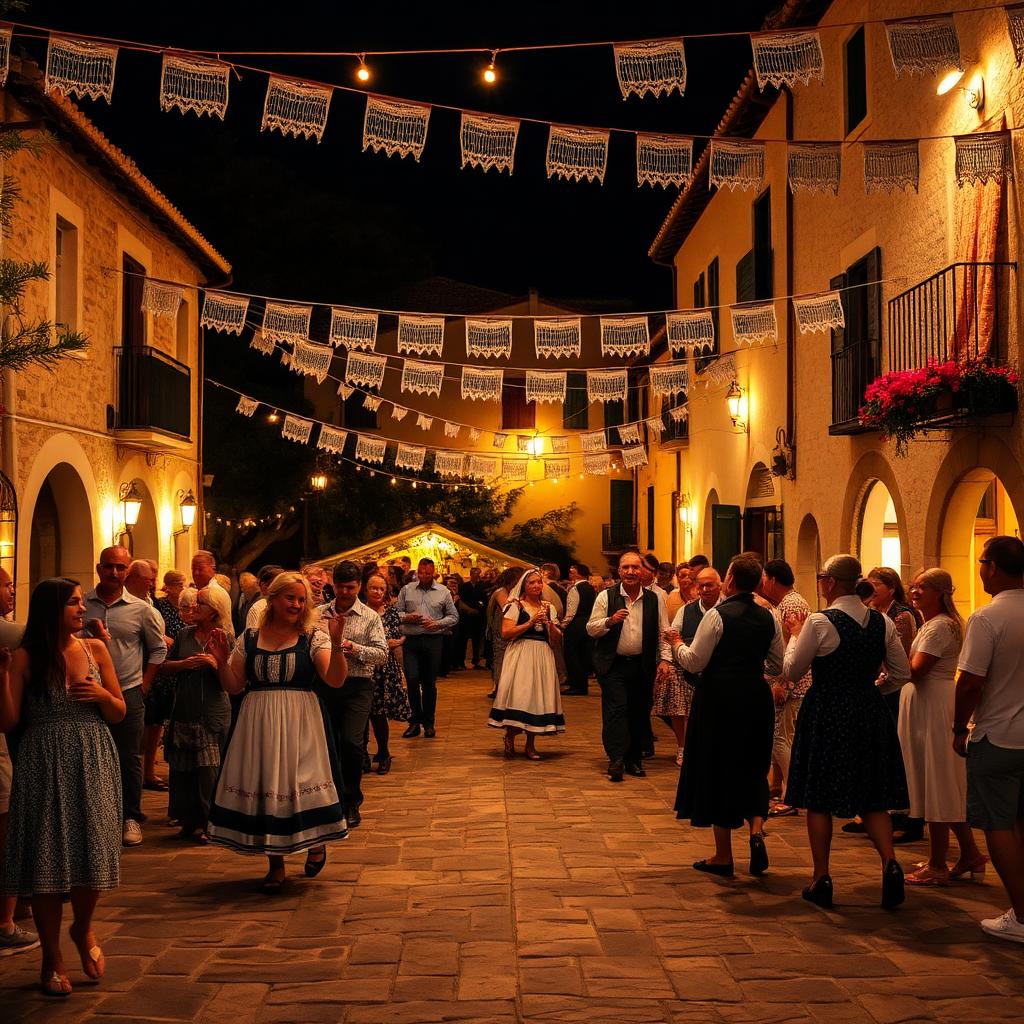
- Observe the traditional 'Ball de Bot' folk dancing which occasionally occurs in the main square at noon during the local saint's day celebrations.
- Expect to pay around 45-60 EUR for a high-quality, handmade leather handbag or briefcase from the local artisans on the Carrer Major.
- Sample the 'Bunyols'—local fritters dusted with sugar—sold from small pop-up stalls for approximately 5 EUR for a dozen.
The Etiquette of the Market
Understanding the unwritten rules of the Mallorcan market is essential for a meaningful interaction. Vendors appreciate it when you don't touch the fruit or vegetables yourself; instead, point and let them select the produce for you. Plastic bags are increasingly discouraged, so bringing your own 'senalla' (wicker basket) not only makes you look like a local but is functionally superior for carrying heavy stone fruit or sourdough 'pa de xeixa'. Language also plays a role; a simple 'Bon dia' (Good morning) and 'Gràcies' (Thank you) in Mallorquí will invariably result in better service and perhaps an extra orange in your bag.
We don't go to the market just to buy food; we go to confirm that we are still part of a community that knows where its bread is baked. — Margalida, stallholder at Mercat de Santa Catalina
Whether you are navigating the dusty livestock pens of Sineu or the polished aisles of Santa Catalina, the markets of Mallorca offer a window into a culture that remains stubbornly rooted in the soil and the sea. They are the antidote to the homogenized experience of the resorts, providing a sensory narrative of the island's true character. To walk these aisles is to step into a timeline that stretches back centuries, where the quality of a tomato or the texture of a textile is a matter of profound civic pride.