Language of the Landscape: A Guide to the Nuances of Mallorquí
More than just a dialect of Catalan, Mallorquí is a repository of the island's history, botanical knowledge, and distinct islander temperament. · 10 min read
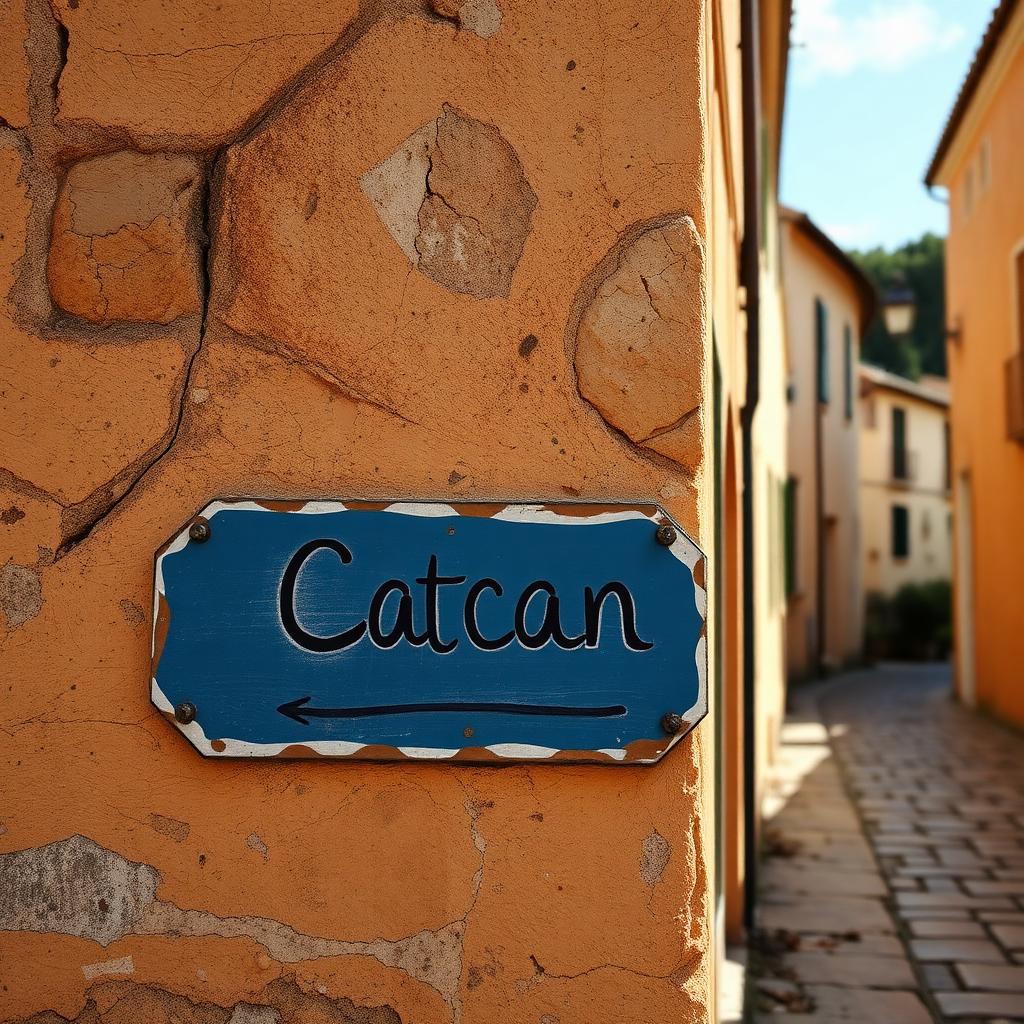
On the surface, the signs in Palma and the announcements on the TIB buses are in standard Catalan. But listen closely to the conversations in a village 'bar de plaça' in Algaida or Binissalem, and you will hear something distinct. Mallorquí is the island's linguistic heart—a dialect of Catalan that has simmered in isolation for centuries, absorbing influences from Arabic, French, and even English. It is characterized by its rhythmic cadence, the frequent use of the 'salat' article (using 'es' and 'sa' instead of 'el' and 'la'), and a vocabulary that reflects its agrarian and maritime roots. For the visitor, even a basic understanding of this linguistic layer reveals a more nuanced, welcoming version of the island.
The Famous 'Salat' Articles
The most immediate difference you will notice is the 'article salat'. While in Barcelona you would say 'La Playa', in Mallorca it becomes 'Sa Platja'. This linguistic quirk is a remnant of ancient Eastern Romance speech that survived here while disappearing on the mainland. It gives the language a softer, more staccato sound. When you see signs for 'Es Molí' (The Mill) or 'Sa Pobla' (The Town), you are seeing the 'salat' in action. It is a badge of identity; using these articles is the simplest way Mallorcans distinguish themselves from 'forasters' (outsiders) from the Spanish mainland or abroad.
- Use 'Es' for masculine singular (e.g., Es Mercat) and 'Sa' for feminine singular (e.g., Sa Seu, the cathedral).
- For plurals, use 'Es' for masculine (Es Turons - the hills) and 'Ses' for feminine (Ses Salines - the salt flats).
- Notice that place names on the Ma-10 mountain road often use these articles: listen for 'Sa Calobra' or 'Es Capdellà'.
- Be aware that in formal writing and some official signage, the standard 'El' and 'La' are still used, creating a bilingual visual landscape.
- The 'salat' is most prominent in rural areas; in central Palma, the speech patterns are often more influenced by standard Catalan and Spanish.
- Interestingly, the villages of Pollença and some parts of the East coast use slightly different variations, proving that even on a small island, language is not uniform.
Essential Phrases for the Village Bar
In the smaller towns of the Pla—places like Petra, Sineu, and Montuïri—English is rarely the first language of the older generation. Stepping into a local bar and using a few Mallorquí words is a powerful gesture of respect. You don't need to be fluent; the effort itself opens doors. Start with 'Bon dia' (Good morning) instead of 'Hola', and 'D'acord' (Agreed/OK) during a conversation. When paying for your 'cafè solo', which should cost around 1.30 EUR, a simple 'Quant és?' (How much is it?) and a 'Gràcies' (Thank you) will immediately soften the service.
A Glossary of the Landscape
The Mallorquí vocabulary is particularly rich when describing the island's unique geography and agriculture. Words that have no direct equivalent in English or Spanish are used daily. Understanding these terms helps you interpret the landscape as you hike the GR-221 or drive the coastal roads. These words are not just labels; they are a history of how the people have managed the water, the stone, and the wind for over a thousand years.
Our language is like the dry stone walls of the Tramuntana—hard to learn, built from the earth itself, and standing strong against the passing winds of time. — Pere, a stonemason from Deià
Decoding the Mallorcan Map
- 'Possessió': A large rural estate or manor house, often with its own chapel and oil mill, defining the social structure of the interior.
- 'Finca': Traditionally a plot of agricultural land, now commonly used to refer to any country house or rural property.
- 'Torrent': A seasonal dry riverbed that transforms into a powerful stream after heavy rains in the mountains, such as the famous Torrent de Pareis.
- 'Clastra': The central courtyard of a possessió, designed for both communal work and protection from the summer heat.
- 'Marges': The dry-stone terraced walls of the Tramuntana mountains, a UNESCO-recognised engineering feat spanning thousands of kilometres.
- 'S'Albufera': A wetland or marsh, the most famous being the nature reserve near Alcúdia, essential for migratory bird species.
The Influence of English and Arabic
Centuries of cultural exchange have left odd fingerprints on the language. The Arabic influence is most visible in water management terms like 'Sénia' (water wheel) and 'Séquia' (irrigation channel). More surprising is the British influence from the 18th-century occupation of nearby Menorca, which filtered into Mallorquí. In some parts of the island, you might still hear 'jan' for a young man (from 'John') or certain nautical terms that have been phoneticised. This layering makes Mallorquí a living museum of Mediterranean history, proving that the island was never as isolated as the sea might suggest.
Embracing Mallorquí is not about achieving linguistic perfection; it is about acknowledging the specific soul of this island. In an age of globalised travel, hearing the 'salat' articles and understanding the meaning of a 'torrent' or a 'possessió' anchors you in the real Mallorca. It allows you to move beyond the role of a spectator and become, even for a moment, a participant in a culture that remains fiercely proud of its unique voice.