Mallorca's Most Beautiful Beaches
Our pick of the best beaches on the island. · 6 min read
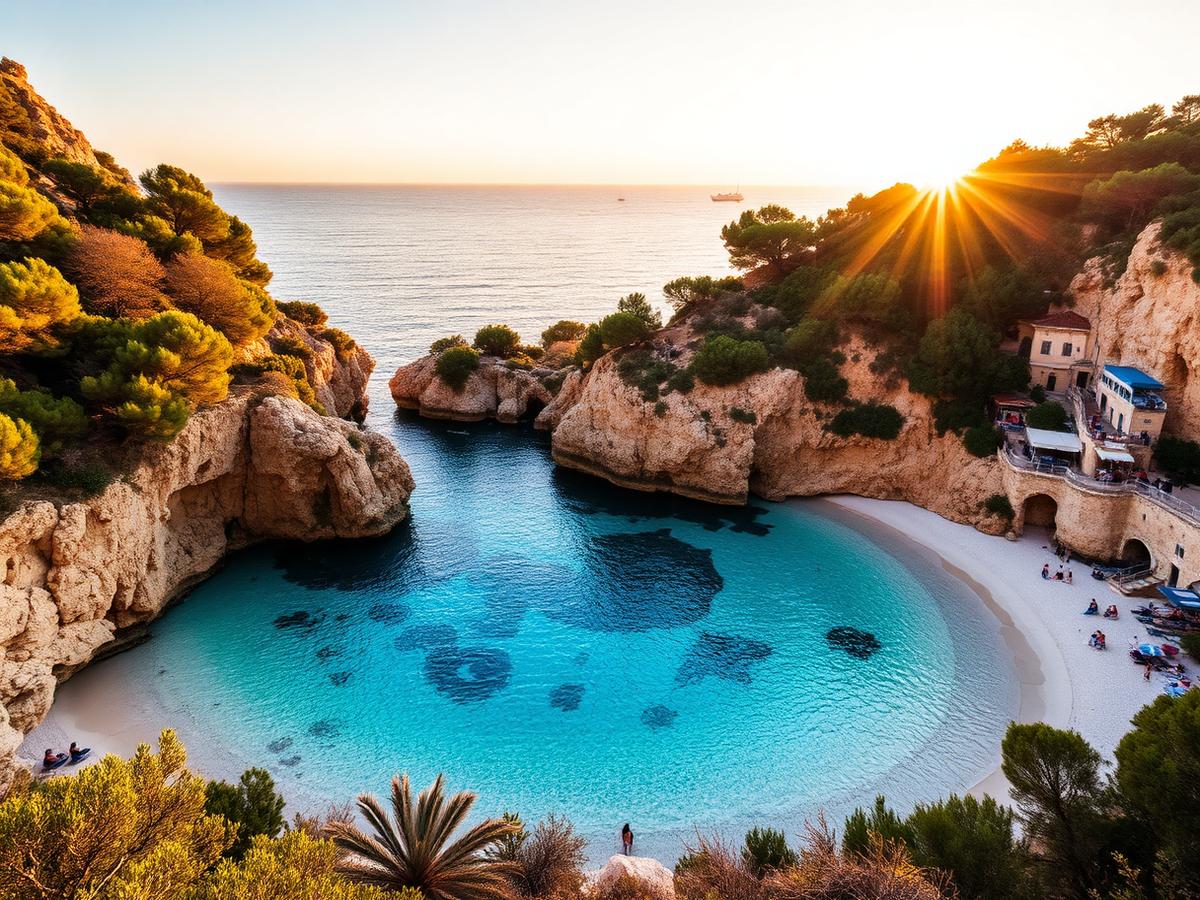
Mallorca has more than 200 beaches and coves, from white-sand family bays to wild rocky inlets you reach only on foot. These are the ten we keep returning to — chosen for natural beauty, water clarity and the right balance of effort and reward. Most are free; none have entry fees. All have local rules worth knowing before you arrive.
The iconic coves
Caló des Moro
Probably the most photographed cove on the island and for good reason — turquoise water, white sand, pine-covered cliffs that frame the bay like a postcard. Tiny (50m wide), so arrive before 09:00 or after 17:00 in summer. Ten-minute walk from the parking down rough steps; not suitable for prams or anyone unsteady. Bring everything; there are no facilities at all.
Cala Mondragó
Inside a protected natural park, with two soft sandy beaches (S'Amarador and Mondragó) separated by a short 15-minute coastal path through pines. Larger and easier than Caló des Moro, with a beach bar and toilets. The water is the same impossible turquoise. Best with kids — soft sand, gentle slope, lifeguards in summer.
Cala Varques
Reached by a 20-minute walk through pine forest from an unmarked parking spot off the MA-4014. No facilities, no crowds, perfect water — the cove the rest of Mallorca dreams about. Bring everything you need including water shoes; the rocks at the entry get hot. Nudism is normal at the far end.
Caló des Marmols
An hour's hike from Cap de Ses Salines lighthouse — the longest approach on this list and the reward is the most untouched cove in Mallorca. White marble pebbles, water that looks Photoshopped, total silence. Bring two litres of water per person; there is no shade and no facilities.
For families
Es Trenc
The closest Mallorca gets to a Caribbean beach — a 3km stretch of pure white sand backed by dunes. Shallow water for 50m, lifeguards in summer, and several beach bars (try Ses Covetes at the south end). Get there early in August. The central €5 car park fills by 10:00; the free verges further north fill by 11:00.
Playa de Muro
Long, flat sand on the north coast (5km!), easy parking, gentle water. The Alcúdia end is quieter and has the cleanest sand; the Muro end has more restaurants and family resorts. The water is shallow for a long way out — perfect for younger children.
Cala Agulla
Near Cala Ratjada in the north-east. Pine-fringed, blue flag certified, with plenty of parking and a long beach bar strip. The walk to the headland on the north side leads to the smaller Cala Moltó if Agulla fills.
Dramatic and wild
Sa Calobra
Not a beach so much as a pebble shore at the mouth of the Torrent de Pareis gorge. The drive in — 12km of hairpin descent through the Tramuntana — is half the experience. Go by boat from Port de Sóller (€25 return) to avoid the road, or arrive before 09:30 in summer.
Cala Tuent
A quieter alternative to Sa Calobra, 4km further along the same road, with views to Puig Major. Mostly pebbles, mostly local. The Es Vergeret restaurant on the cliff above has perhaps the best terrace view of any restaurant on the island — book ahead for lunch.
Cala Boquer
A 30-minute walk from Port de Pollença down a dramatic valley between two limestone walls. Wild goats, no facilities, deep clear water for swimming. The walk back is uphill in full sun — go early or late.
When to go
May, June, September and early October are the sweet spot — water at 21–24°C, fewer people, easier parking. July and August are spectacular but require early starts (be on the beach by 09:00 or expect to walk far). November to April the water drops to 16–18°C, but winter swims at midday are entirely possible if you're brave — and the beaches are yours alone.
How to find your own
The trick most locals use: drive any coastal road, stop at any sign that says 'cala', walk for 15 minutes. Mallorca's coast is so indented that even on the busiest August day there is a cove within a kilometre with five people on it. The famous beaches earn the queues; the unnamed ones earn the loyalty.