Where to Stay in Mallorca: An Area-by-Area Guide
Find your Mallorca base, from Palma and mountain villages to sandy bays, with honest advice for families, couples and car-free stays. · 13 min read
The best area to stay in Mallorca depends less on the island’s size than on the holiday you want to have. Palma puts galleries, restaurants and transport connections on your doorstep. The Tramuntana offers mountain villages and walking country. The north has long sandy bays, while the southeast trades sweeping beaches for small, pine-framed coves.
Start with three decisions: beach or town, car or no car, and lively evenings or quiet nights. A beautiful inland finca is the wrong choice if you want to walk to the sea before breakfast; a beachfront resort is not the same experience as staying inside a historic town. This area-by-area guide explains the differences, including the compromises that matter once you arrive.
Where to stay in Mallorca: quick picks
- Best for couples: Sóller for town life and mountain scenery; Deià for a romantic village escape; Santanyí for galleries and coastal day trips.
- Best for families: Playa de Muro and Port d’Alcúdia for sandy beach holidays; Port de Pollença for a seaside base with an easy evening promenade.
- Best for walkers and hikers: Sóller and the surrounding Tramuntana; Deià and Valldemossa for a village-centred walking break.
- Best for cyclists: Port de Pollença for access towards the Tramuntana, or the inland Pla for riding through agricultural country. Match routes to your experience.
- Best for nightlife: Palma for restaurants, cocktail bars and late evenings; Magaluf in Calvià if clubs are the purpose of the trip.
- Best without a car: Palma first; central Port de Sóller or Port de Pollença if you are happy to spend most days locally.
- Best for beaches: Playa de Muro for a long sandy shoreline; Cala d’Or for a choice of smaller coves.
- Best for culture and food: Palma for the widest city break; Pollença, Artà and Santanyí for a smaller-town rhythm.
Palma: old town, Santa Catalina and Portitxol
Best for culture, food, short breaks and travellers deciding where to stay in Mallorca without a car. Palma is a working city rather than a self-contained beach resort: expect museums, shopping streets, neighbourhood cafés and a much broader choice of evenings out than in the villages.
The old town suits visitors who want to step into historic lanes and explore around La Seu and the Almudaina Palace. Santa Catalina is the choice for a market neighbourhood and restaurant-led evenings; choose your street carefully if you value sleep over nightlife. Portitxol shifts the emphasis to the waterfront, with former fishing-quarter character and seafront walks, but it is less convenient for repeated trips into the historic centre.
Beaches nearby: Can Pere Antoni is the city beach east of the cathedral; Portitxol and the coast towards Es Molinar suit a stay with regular waterfront time. Choose Palma for combining the sea with a city, not for an untouched-cove setting.
Getting around: walk within the centre and use EMT for city journeys. The EMT A1 airport bus connects the airport with Palma centre, including Plaça d’Espanya / Estació Intermodal. TIB’s interurban bus and rail network makes Palma a useful launch point for day trips. Do not assume the airport bus stops near every old-town address.
Accommodation and downsides: expect boutique hotels in converted townhouses, larger city hotels and a smaller waterfront selection around Portitxol. Central parking is a burden rather than a benefit; pedestrian lanes complicate luggage drop-offs. Rooms facing busy streets or bars deserve extra scrutiny, and accommodation with outdoor space often commands a premium.
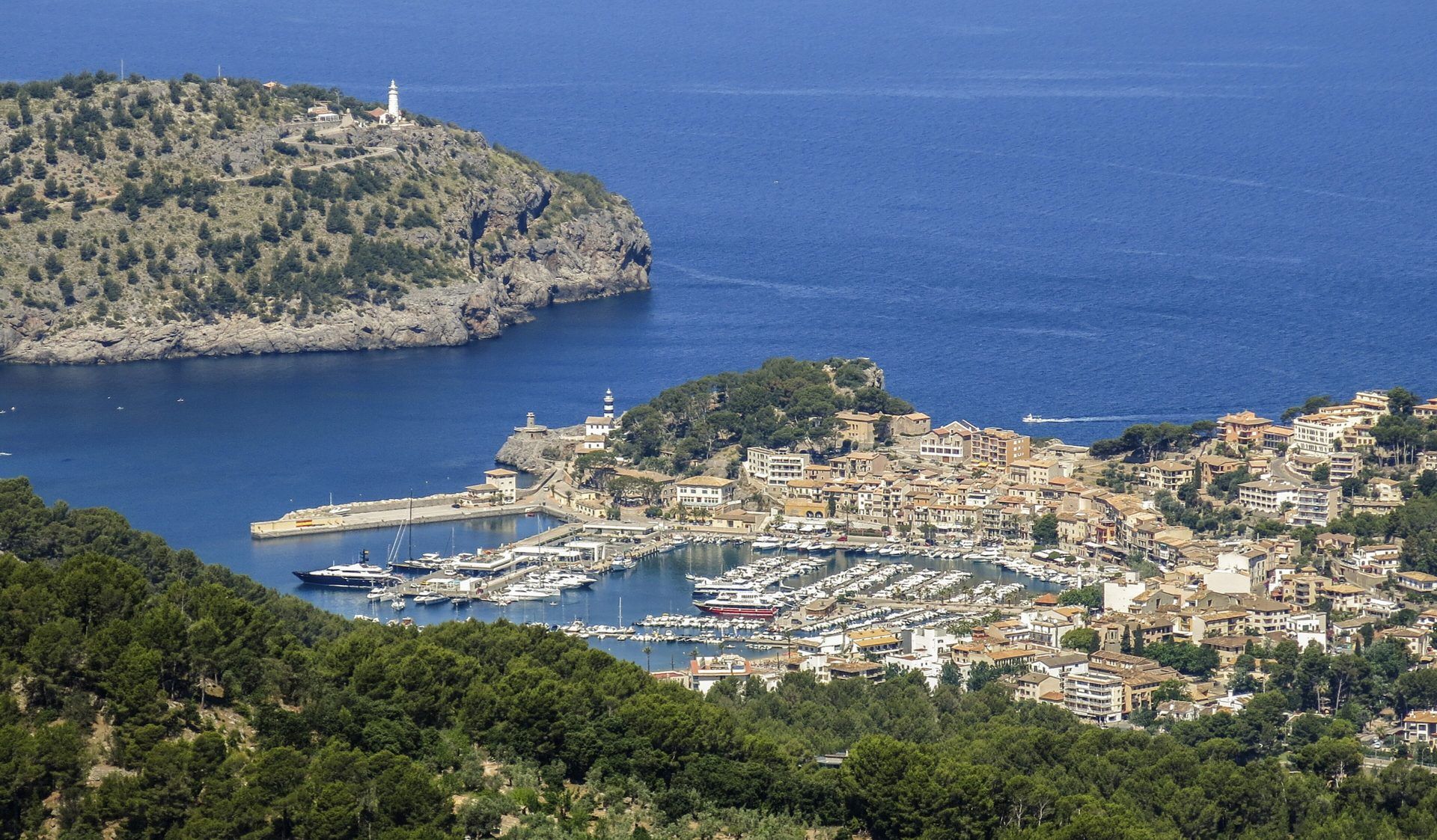
Sóller & Port de Sóller
Best for couples, walkers and first-time visitors who want a balance of mountains and sea. Sóller sits inland in a Tramuntana valley, with a handsome central square, narrow streets and orchard country around it. Port de Sóller is the seaside alternative: a curved bay, promenade, boats and beach-focused days. Choose town for atmosphere beyond the waterfront; choose the port if swimming is the daily priority.
Beaches nearby: the port’s sandy stretches, including Platja d’en Repic, make this one of the west coast’s more practical seaside bases. Staying in Sóller itself means travelling to the beach rather than walking out directly onto it.
Getting around: the historic Palma–Sóller railway connects the city and town; the Sóller tram links the town with the port. These are separate services, so check the ticket combination you need. TIB also operates route 204 between Port de Sóller and Palma. Read current timetables before planning an airport connection, and check the railway’s winter maintenance closure dates.
Accommodation and downsides: Sóller has small townhouse hotels and rural stays around the valley; the port adds seafront hotels and resort-style accommodation. Popular waterfront areas are busy in summer. Hillside addresses can involve steep climbs, while mountain roads make cross-island outings more involved than a map suggests. For hiking, plan the actual route and return journey rather than treating every nearby path as an easy stroll.
Deià & Valldemossa
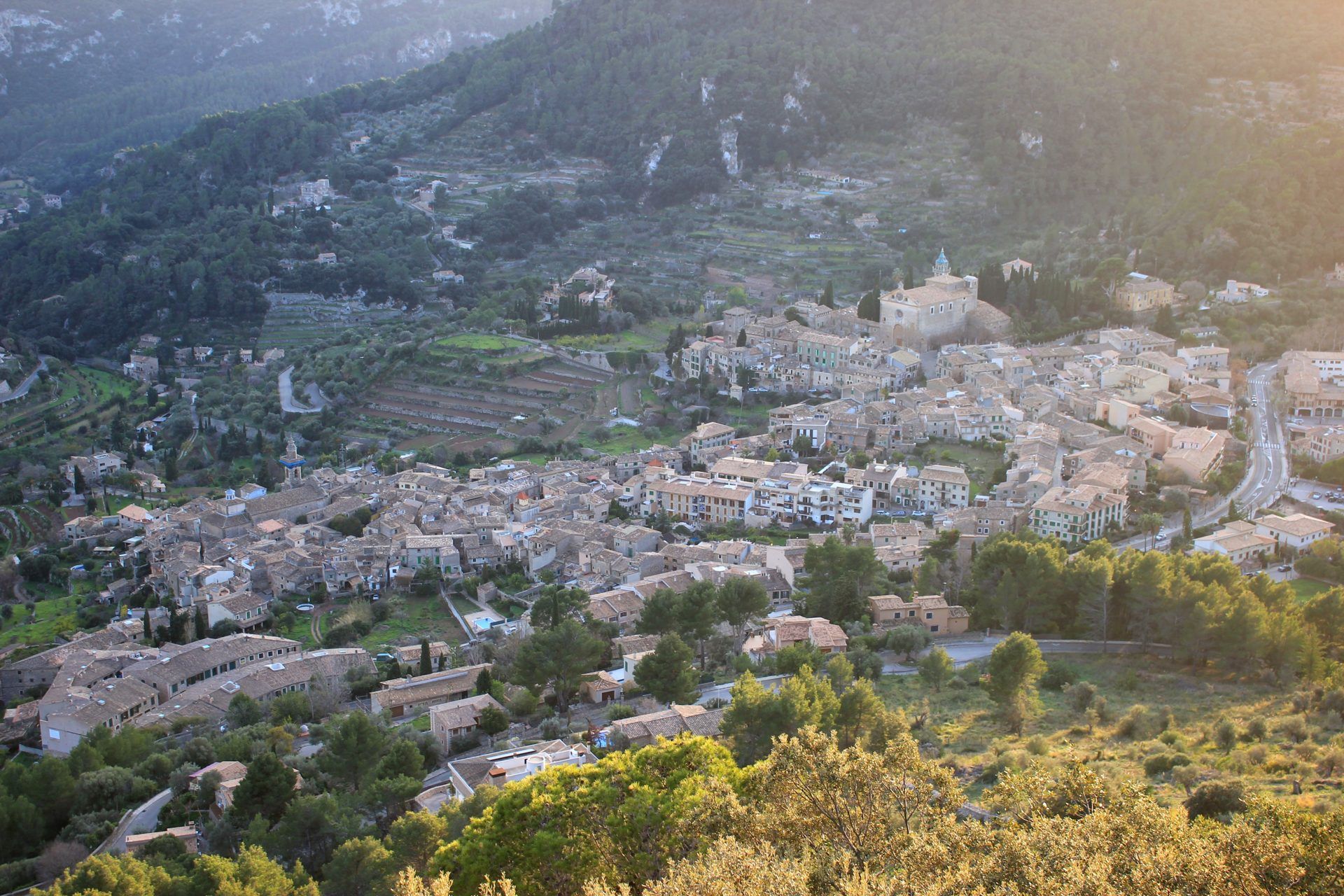
Best for couples, scenery and visitors who prefer village evenings to resort entertainment. Both offer stone buildings and Tramuntana settings, but they are not interchangeable: Deià is closely associated with its coastal outlook and artistic identity; Valldemossa is an inland mountain village with a historic centre and the Royal Charterhouse at its heart.
Beaches nearby: Cala Deià is a rocky cove, not a broad sandy family beach. Port de Valldemossa is a separate coastal settlement below the village. Neither village is a sensible choice if your main requirement is an easy, level walk to a sandy beach each morning.
Getting around: TIB route 203 serves Valldemossa and Deià. Check the stop, direction and last return for the journey you intend to make. A village stop does not solve access to a remote finca or a cove below the main road; a car gives more flexibility, but narrow roads and limited parking are part of the trade-off.
Accommodation and downsides: small village hotels, high-end retreats and country houses dominate the appeal. This is not the strongest hunting ground for inexpensive, large family accommodation. Day visitors concentrate in the village centres; steps, cobbles and slopes matter with pushchairs or reduced mobility. Book for the mountain atmosphere, not for effortless beach access.
Pollença & Port de Pollença
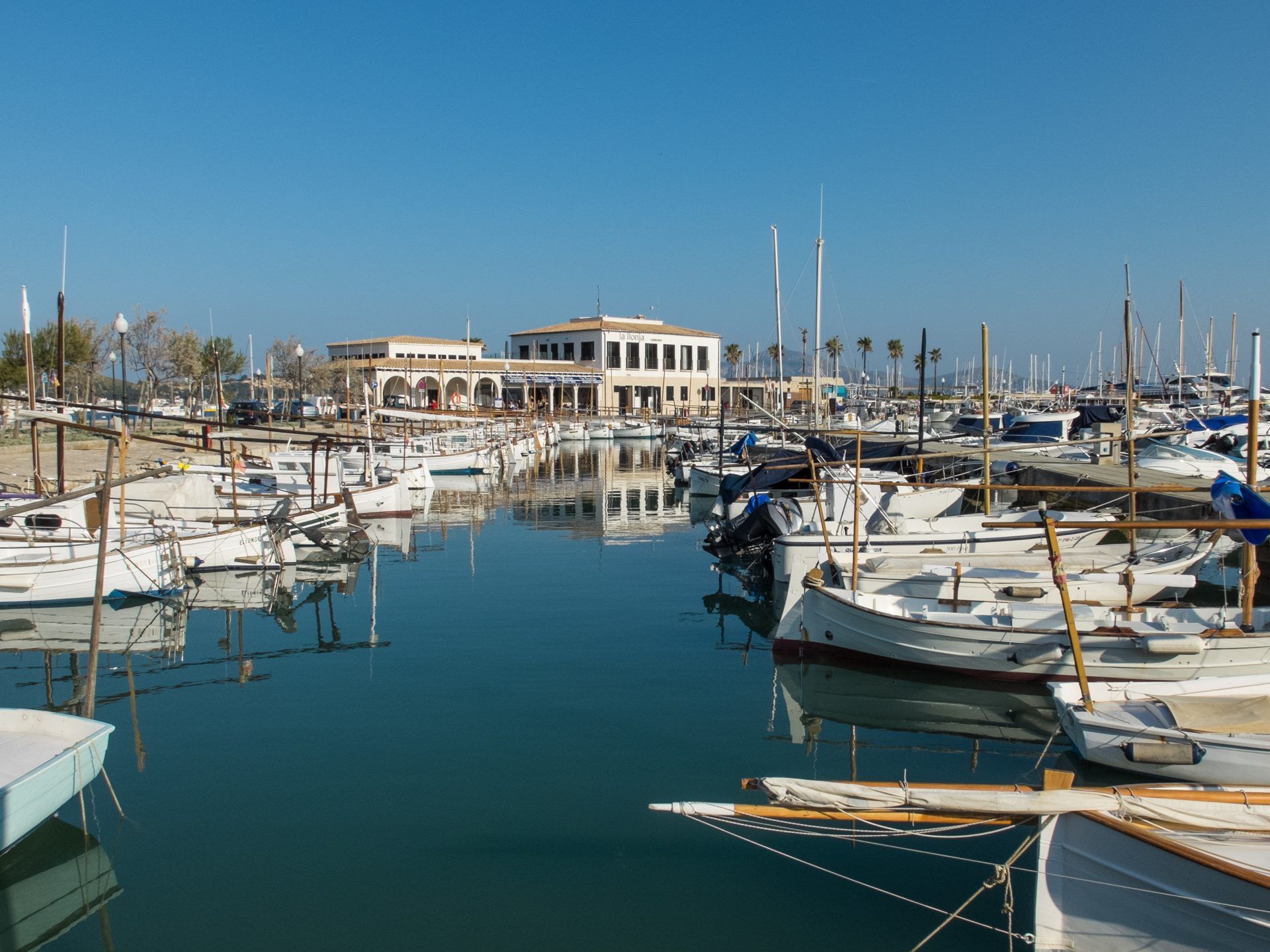
Best for families, cyclists and couples choosing between old-town character and a seaside routine. Pollença is inland, with stone streets, squares and the climb to El Calvari. Port de Pollença is the coastal base, with a bay-front promenade and a more straightforward beach-holiday layout. The port is our stronger all-round choice if you want dinner and sand within walking distance.
Beaches nearby: the port has sandy shoreline around the bay; Cala Sant Vicenç offers a different, cove-based outing. Formentor is another excursion, not a reason to assume every stay in this area comes with a secluded beach on the doorstep. Sea conditions vary: follow beach flags rather than relying on a bay’s sheltered appearance.
Getting around: TIB route 301 connects Port de Pollença with Palma. Use TIB’s journey planner for the exact stop and any local connections between your accommodation, Pollença and the coast. The central port works well without a car if most of your holiday is spent there; a country villa outside town is a different proposition.
Accommodation and downsides: expect seafront hotels and apartments in the port, smaller character hotels in Pollença and villas in the surrounding countryside. The old town has no beach, the port is seasonal, and outlying villas can turn every meal into a transport decision. Cyclists should confirm secure storage and workshop arrangements with the property, not assume these are included.
For a closer look at neighbourhoods, beach choices and the town-versus-port decision, see our Port de Pollença guide. MBook’s in-depth area guides help you narrow an island-wide shortlist to the right base.
Alcúdia & Playa de Muro
Best for families and beach-first holidays. Separate three settings: Alcúdia’s walled old town, the port and resort around Port d’Alcúdia, and the long beachfront strip of Playa de Muro, labelled Platja de Muro on local transport maps. Choose the old town for historic surroundings, the port for a combination of beach and evening choice, or Playa de Muro to make the shoreline the centre of the holiday.
Beaches nearby: Platja d’Alcúdia and Playa de Muro form part of the broad sandy coastline of Alcúdia Bay. The long beach is a compelling reason to stay here with children, but proximity to sand is not a substitute for checking beach flags, lifeguard coverage and the conditions on the day.
Getting around: TIB route 302, the Can Picafort–Palma service, serves the bay corridor including Platja de Muro and the Alcúdia area. Check the stop closest to your property: a resort described as “Alcúdia” can be well away from the old town. A beachfront stay can work without a car if you are content to keep excursions selective.
Accommodation and downsides: family resorts, aparthotels and larger beachfront hotels are the obvious choices along the coast; Alcúdia old town offers smaller character accommodation. Resort strips can feel busy and commercial, and some addresses involve crossing a main road to reach the beach. Ask about the actual beach route, children’s pool arrangements and seasonal opening of facilities rather than choosing on a pool photograph alone.
Cala d’Or & Santanyí
Best for cove lovers, couples and families who want the southeast coast. Cala d’Or is a purpose-built holiday base of low-rise white buildings, small beaches and a marina. Santanyí is an inland stone town: choose it for galleries, browsing and evenings in town, with beaches as outings rather than an extension of the hotel terrace.
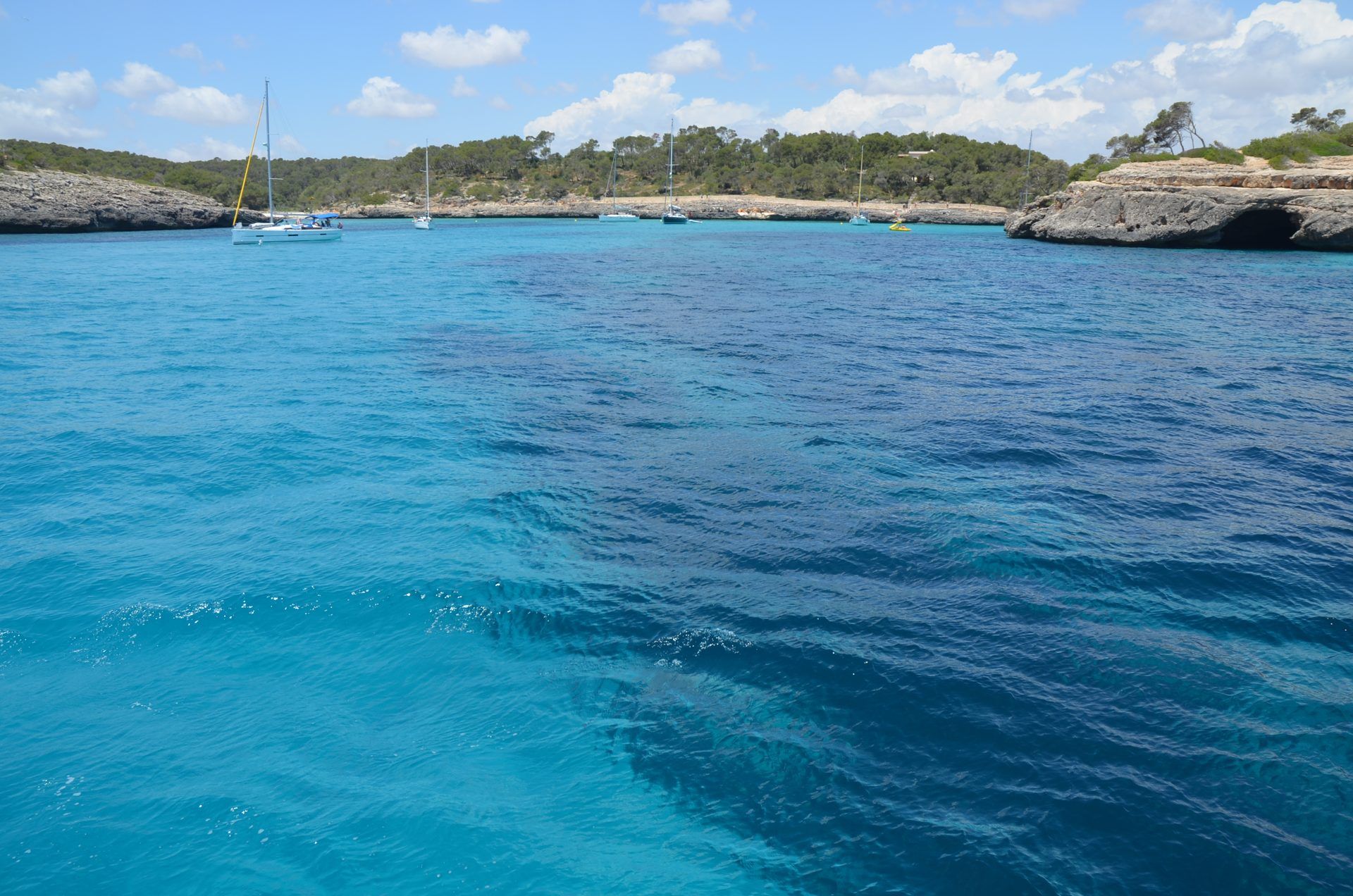
Beaches nearby: Cala d’Or’s coves include Cala Gran and Cala Esmeralda. From the Santanyí side, Cala Santanyí and Cala Llombards are natural candidates; Mondragó’s protected landscape adds another coastal outing. These are smaller pockets of sand than Alcúdia Bay, so they can feel full quickly in peak season.
Getting around: TIB’s official network map lists route 515 between Cala d’Or and Campos, and route 501 between Manacor, Campos and Palma. Check the journey planner for your precise route and connection; do not treat Cala d’Or, Santanyí and every nearby cove as one walkable resort. A car is the more flexible choice for a town stay with different beaches each day.
Accommodation and downsides: Cala d’Or has resort hotels and self-catering apartments; Santanyí offers small town hotels, with rural accommodation outside the centre. Cove access can involve steps and summer parking pressure. Without a car, pick accommodation close to the beach you actually intend to use rather than relying on an appealing regional label.
Port d’Andratx & Santa Ponsa / Calvià
Best for couples who enjoy harbour dining, or families wanting an established southwest resort. Port d’Andratx is about the waterfront and boats rather than a long sandy beach. Santa Ponsa, locally Santa Ponça, is the beach-resort option. Calvià is the wider municipality and also an inland village: a “Calvià” address alone tells you very little about the holiday on offer.
Beaches nearby: Santa Ponça has a broad sandy beach backed by resort services. From Port d’Andratx, consider Camp de Mar or Sant Elm as separate beach outings. Do not book a harbour-view room expecting a big beach directly below it.
Getting around: TIB’s network includes route 101 between Port d’Andratx and Palma and route 103 between Santa Ponça and Palma. Central resort locations are much easier without a car than hillside villas. Check the walk from the bus stop carefully, including gradients.
Accommodation and downsides: the southwest offers larger resort hotels, apartments, upscale coastal stays and villas, with rural options around inland villages. Some hillsides are steep; some resort streets are lively late into the evening. Port d’Andratx is not the best-value choice for a sand-first holiday. For club-led nightlife, look specifically at Magaluf rather than assuming all of Calvià has the same atmosphere.
Artà & Cala Ratjada: the northeast
Best for visitors who want a less obvious town base or a lively coastal holiday beyond the north’s main bays. Artà is inland, with a historic centre and the elevated sanctuary of Sant Salvador. Cala Ratjada, written Cala Rajada on TIB services, is a harbour resort with more of an evening scene. Choose Artà for town character; choose the coast if beach access matters more.
Beaches nearby: Cala Agulla is a major sandy-beach draw near Cala Ratjada, edged by pines and rocky coastline. Cala Mesquida is another northeast option; the more remote Artà coast rewards deliberate planning rather than a casual assumption of roadside access. Exposed beaches can have surf and currents: check flags and conditions.
Getting around: TIB’s official map lists route 411, Cala Rajada–Manacor, and the express route 411e, Cala Rajada–Palma. Use the TIB planner to check whether the service you need stops in Artà and how it connects with your arrival. A car is useful for exploring different beaches and rural accommodation; a central coastal stay is simpler if you want to stay put.
Accommodation and downsides: Artà offers townhouse hotels and country stays; Cala Ratjada has a broader resort-hotel and apartment selection. Neither is an efficient base for repeated Palma evenings or west-coast touring. The coast is livelier and more seasonal than inland Artà, while remote beaches demand more preparation than a serviced resort strand.
Inland & the Pla: rural agroturismos
Best for slow travel, rural couples’ escapes and families who value space over walking to the beach. The Pla is Mallorca’s agricultural interior: think village squares, fields and a quieter daily rhythm. Around places such as Sineu, Petra and Algaida, the appeal is being away from the resort belt, not reproducing it beside a pool.
Beaches nearby: none are on the doorstep. The right coast for a day out depends on your exact village or finca. Avoid choosing a rural address on the assumption that a central position means quick journeys everywhere: allow for the final approach roads and parking at your destination.
Getting around: TIB rail services include T3 between Palma and Manacor, serving Sineu and Petra. A room within walking distance of a station is a very different no-car choice from an agroturismo outside the village. Check the official TIB network and timetable, then solve the final leg to the property before booking. For an isolated rural stay, plan on having a car.
Accommodation and downsides: agroturismos are farm-based visitor accommodation; rural hotels and restored village houses provide other ways to stay inland. Check what the individual property actually offers: dinner service, kitchen access, pool season, air conditioning and suitability for children are not universal. Rural does not automatically mean inexpensive or entirely silent, and driving out for every dinner can undermine the relaxed holiday you had in mind.
When to book and which season to choose
For July and August, secure the accommodation that defines the trip first: a family apartment near the beach, a small village hotel or a rural property with the right room configuration. Start looking as soon as your dates are firm, especially for school holidays. There is no useful island-wide rule that booking a fixed number of months ahead guarantees the lowest price; compare cancellation terms and the total cost, not just the nightly rate.
May, June, September and early October are strong starting points for a mixed holiday of towns, coast and time outdoors. July and August suit a beach-led trip better than strenuous midday walking. Sea temperature, rain and wind vary, so shoulder-season dates are not a promise of swimming weather.
For walking and cycling, prioritise spring and autumn and check conditions before committing to a demanding route. For winter culture and food, Palma is the most straightforward base. Coastal resorts can be much quieter outside their main season, with individual hotels, restaurants and activities closing; confirm the facilities that matter to you directly.
Transport needs the same seasonal check. Consult EMT, TIB and the Sóller railway shortly before travel, particularly for the last service, public holidays and railway maintenance closures. An attractive winter room price is poor value if the journeys or facilities central to your holiday are unavailable.
What is the best area to stay in Mallorca for a first visit?
Choose Palma for culture, restaurants and public transport; Port de Pollença for a balanced seaside holiday; or Playa de Muro if a long sandy beach is the priority. Sóller is a strong alternative for combining a characterful town with mountain scenery. Decide whether you want the beach or the town within walking distance before comparing accommodation.
Where should I stay in Mallorca for families?
Playa de Muro and Port d’Alcúdia are strong choices for sandy beach days and family-oriented accommodation. Port de Pollença is another practical option, while Santa Ponça combines a sandy beach with established resort services. Check the exact beach route, pool arrangements, room layout and evening noise before booking.
Where is the best place to stay in Mallorca for couples?
Choose Sóller for a town-and-mountains break, Deià or Valldemossa for village atmosphere, and Santanyí for a town base with southeast-coast outings. Palma suits couples who prioritise dining, galleries and lively evenings. If daily swimming matters most, stay on the coast rather than in an inland village.
Where should I stay in Mallorca without a car?
Palma is the easiest overall choice, with the EMT A1 airport bus and access to TIB interurban services. Central Port de Sóller and Port de Pollença can also work well if most days are local. Check the walk from the stop to your accommodation and the last return service; remote fincas and hillside villas are less practical.
Is it better to stay in one place or split a Mallorca holiday?
One base works well when you choose the area that matches most of your plans. Split a longer holiday if you want substantial time in both the Tramuntana and the southeast, or a city break followed by the beach. Avoid changing hotels simply to tick off places: packing, check-in times and transfers consume useful holiday time.
Photo credits
- Port de Sóller bay with boats and the Tramuntana mountains: Vicenç Salvador Torres Guerola, CC BY-SA 3.0, via Wikimedia Commons
- Valldemossa village and the Cartoixa among the Tramuntana hills: Julian Nyča, CC BY-SA 3.0, via Wikimedia Commons
- Port de Pollença seafront and bay: Michal Osmenda, CC BY 2.0, via Wikimedia Commons
- Turquoise water at Cala Mondragó near Santanyí: Krisztina.Konczos, CC BY-SA 2.0, via Wikimedia Commons