The Gilded Coast: Exploring the Glamorous Bays of Calvià and Andratx
Southwest Mallorca is where luxury yachts meet sheltered crystalline bays, offering an intoxicating mix of high-end amenities and stunning natural geology. · 10 min read
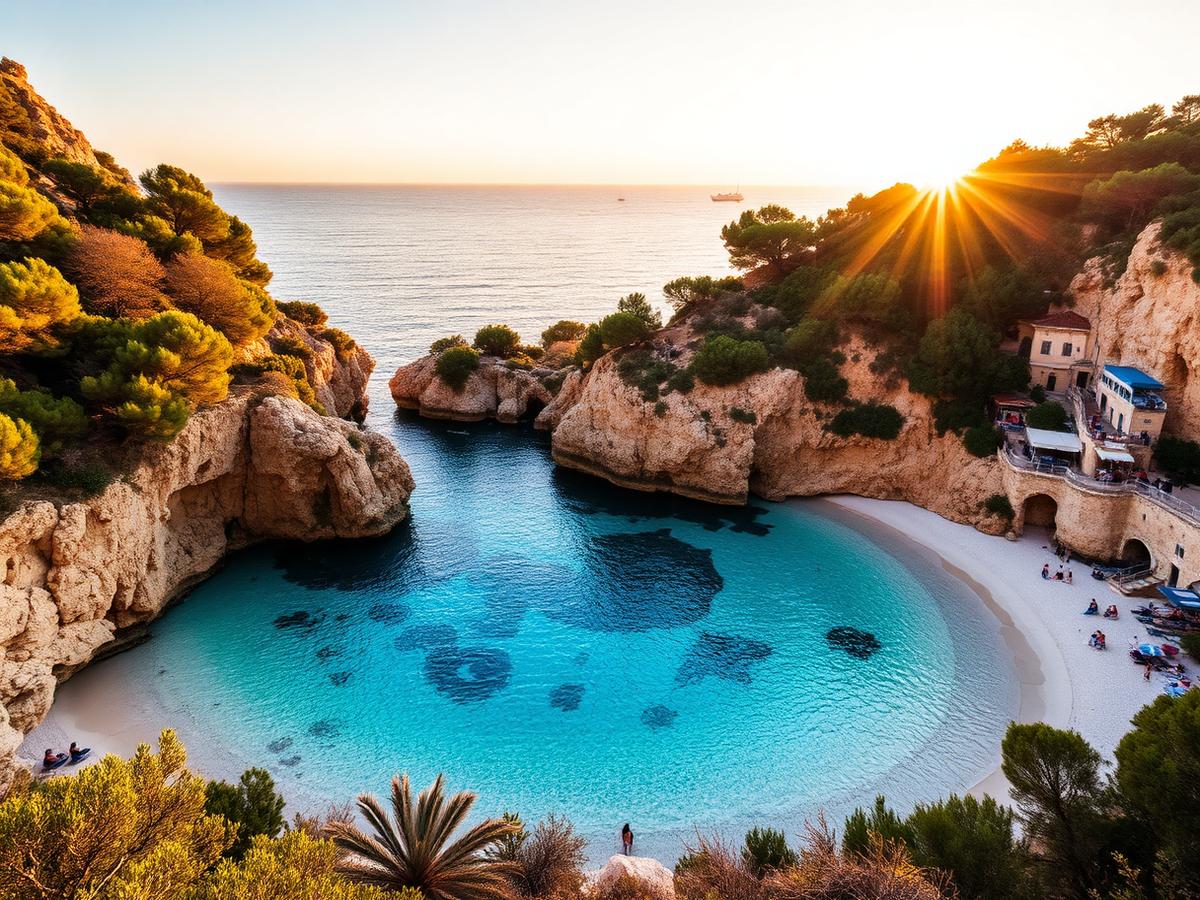
The southwest of Mallorca, particularly the stretch between Magaluf and Port d'Andratx, is often associated with the island's most affluent residents and visitors. However, beyond the five-star hotels and private villas lies a coastline of remarkable variety. You will find sea caves historically used by pirates, beaches with islands at the center accessible via wooden bridges, and rocky 'beach clubs' where the pool is the Mediterranean itself. It is a region where you can spend 100 EUR on a daybed or find a quiet rocky ledge for free—if you know where to look.
The Magic of Camp de Mar
Camp de Mar is one of the most unique beaches in the Balearics. The bay is quite large with calm, shallow water, but its most famous feature is 'La Illeta'—a tiny island connected to the beach by a long wooden walkway. The island houses a restaurant where you can dine surrounded entirely by the sea. The beach is well-sheltered from the wind, making it a favorite for those early-season swims in May.
- A large free car park is available at the entrance of the resort, making it much more accessible than the coves further east toward Palma.
- The TIB Bus L101 connects Camp de Mar to Palma and Port d'Andratx, providing a convenient car-free alternative for about 4 EUR.
- Sunbeds and umbrellas are available for rent, typically costing around 18-22 EUR for a set of two plus an umbrella for the day.
- Excellent hiking trails lead from Camp de Mar to the neighboring Cala Fornells; the 'Cami de Llum' trail offers stunning coastal views and takes about 45 minutes.
- The water is particularly clear here due to the lack of heavy boat traffic in the immediate swimming area, making it perfect for shallow-water snorkeling.
- Reservation for the 'Restaurant Illeta' is mandatory in summer and should be made at least a week in advance for lunch slots.
Cala Llamp and the Beach Club Vibe
Just around the corner from the sophisticated Port d'Andratx lies Cala Llamp. This 'beach' has no sand. Instead, it is a dramatic rocky shelf where the Beach Club Gran Folies is located. It is the gold standard for luxury beach days on the island, featuring a saltwater pool, tiered sun terraces, and direct ladder access into a deep, electric-blue sea.
Portals Vells and the Sea Caves
Further south, the Portals Vells area offers a cluster of three small beaches: Sa Caleta d'en Boira, Sa Platgeta de Portals Vells, and Playa del Mago (the island's first official nudist beach). This area is famous not just for its sand, but for the 'Cova de la Mare de Déu'—a massive cave carved out by stone cutters to build Palma’s cathedral. You can walk into these cool, cavernous spaces right from the water's edge.
Swimming at Portals Vells feels like entering a natural amphitheater, where the history of the island’s architecture is etched into the sandstone cliffs. — Andreu Vidal, Mallorcan Historian
Cala Fornells: Architecture and Inlets
Cala Fornells is known for its distinctive Mediterranean architecture—warm terracotta colors and tiered buildings designed by Pedro Otzoup. The beach itself is small and sandy, but the surrounding rocky platforms provide numerous private spots for sunbathing. It is a quiet, sophisticated pocket located just a few minutes drive from the busier town of Peguera.
- The TIB L122 bus runs to the nearby Peguera, from which Cala Fornells is a pleasant 15-minute uphill walk.
- Parking is limited to street spots which fill up by 10:00 AM; many visitors choose to walk from the municipal lots in Peguera instead.
- Cala Fornells is an excellent spot for stand-up paddleboarding (SUP) because the bay is sheltered from the prevailing westerly winds.
- Expect a mix of international residents and German tourists; the area has a very established, calm atmosphere compared to Magaluf.
- Dining at La Gritta provides one of the best sunset views in the southwest, overlooking the Malgrats Islands.
Navigating the Southwest
The southwest is the most developed part of the island, meaning you are rarely far from a good coffee or a pharmacy. However, the roads can become very congested during the evening 'rush' back toward Palma (the Ma-1). Timing your return journey for after 20:00 or before 17:00 will save you significant sitting time in traffic. The Ma-10 mountain road also begins its journey here near Andratx, offering a scenic route if you aren't in a hurry.
From the 'Isla' at Camp de Mar to the sun-drenched rocks of Cala Llamp, the southwest is Mallorca's playground for those who enjoy the finer details of coastal living.